System over goals
You do not rise to the level of your goals, you fall to the level of your systems.
Ambition is merely a destination, but your systems are the vehicle that actually gets you there. When pressure mounts and challenges arise, your willpower can often falter, leaving only your daily habits and repeatable processes to sustain performance. High-achieving leaders focus less on the finish line and more on the structural environment that makes excellence inevitable. True growth isn't found in a singular reach for the stars; it’s built into the uncompromising quality of your operational foundation.
What gets measured
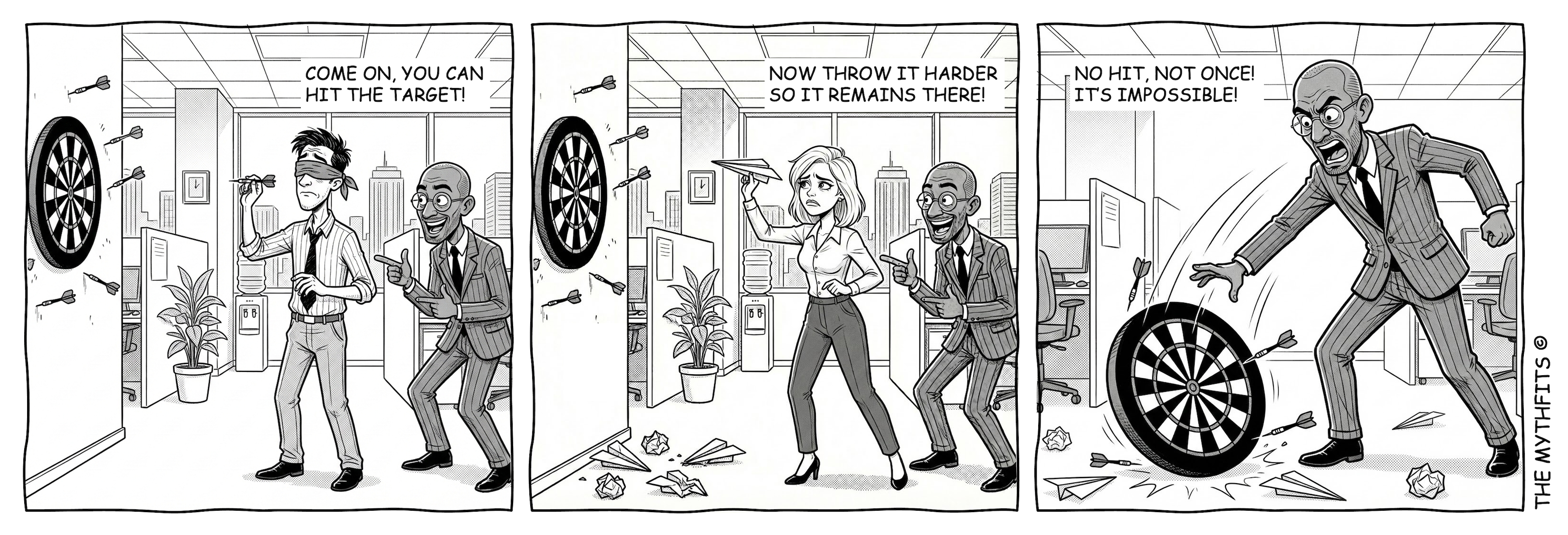
"What gets measured gets managed" is the fundamental law of organizational focus: data transforms abstract goals into actionable targets. By quantifying performance, you strip away ambiguity and force a team to confront the reality of their progress—or lack thereof. However, this principle is a double-edged sword, as it incentivizes people to prioritize the specific metrics you track over everything else. To lead effectively, you must ensure you are measuring the drivers of long-term value, because whatever you put on the dashboard will inevitably become the center of your culture's gravity.
Wellbeing
True leadership isn’t about wishing for employee well-being; it’s about architecting the culture that makes it possible. You cannot simply instruct a team to avoid burnout while simultaneously rewarding late-night emails and impossible deadlines. Your primary responsibility is to design sustainable workflows and embody the boundaries you want your team to adopt. Influence starts with your actions, not your aspirations.
Micromanagement
As a leader, your job is not to control other people; it’s to control yourself and trust that others will follow.
Leadership is less about the authority you exert over others and more about the discipline you exercise over yourself. By shifting from a mindset of control to one of self-regulation, you create a high-trust environment where excellence becomes organic rather than enforced. When you lead by example through consistent integrity and emotional intelligence, you inspire a voluntary commitment that control can never replicate. Ultimately, your ability to trust your team is a direct reflection of your own internal stability, which serves as the most powerful magnet for talent.
Autopilot operation
Cruise control doesn't work when the road bends. And in business, the road is always bending.
Relying on established routines and "autopilot" processes is a recipe for failure in an environment defined by constant disruption. Success in leadership requires active, hands-on navigation because standardized systems cannot account for the sudden shifts in market dynamics or internal culture. When the landscape changes, the most dangerous move is to remain static; you must maintain the agility to steer manually through every turn. To thrive, a manager must trade the comfort of consistency for the vigilance of continuous adaptation.