Benchmark
Benchmarks are valuable guideposts, not blueprints.
Benchmarks provide essential context for where you stand, but they are never a substitute for an original strategy. While they help you measure relative performance, blindly following an industry standard often leads to mediocrity rather than a true competitive advantage. Use external data to calibrate your direction, but rely on your unique organizational DNA to build the actual path forward.
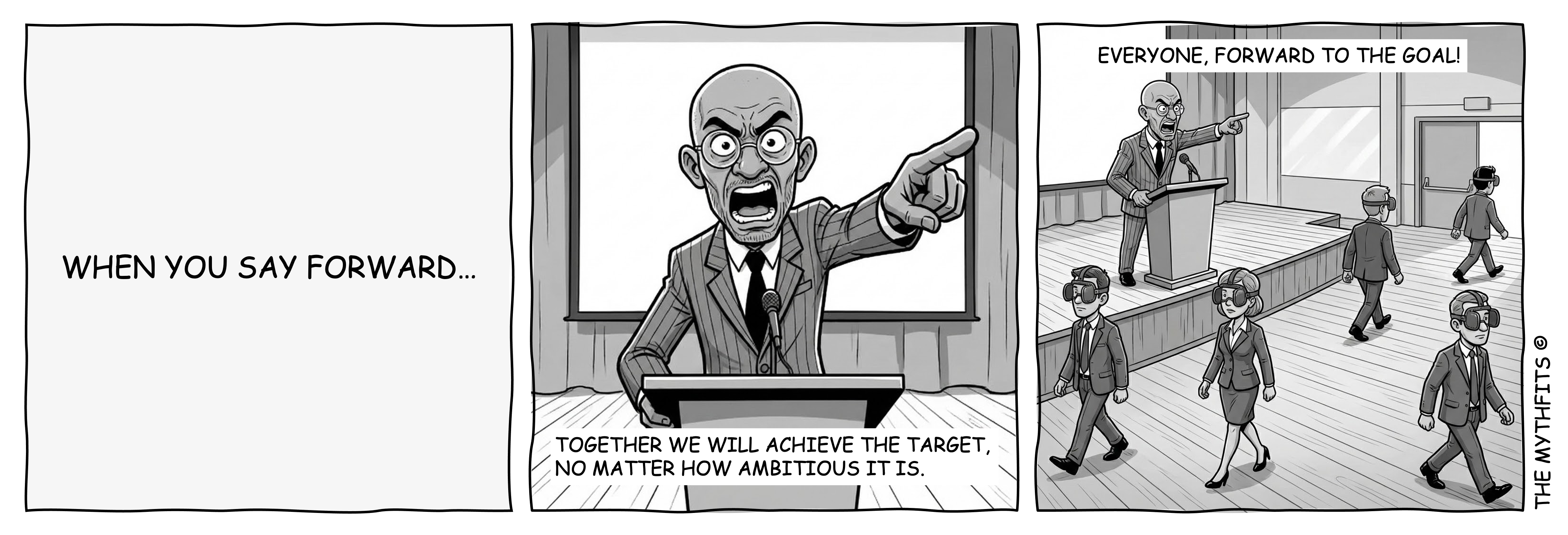
When you say forward
When you say forward, you have to define the exact direction.
Vague goals are the enemy of execution. Until you define what ‘forward’ means, you're standing still. True momentum requires a pinpointed North Star that shines into every corner of your organization. Without a specific, shared map, your departments won't move together; they’ll retreat into their silos, pulling the company in a dozen different directions. Instead of a synchronized march toward victory, you get a chaotic scramble where everyone is busy, but no one is winning together. You don't need a general heading; you need a unified strike.
Diluted focus
Diluted focus is the silent killer of organizational momentum. When management claims three priorities but speaks of four and acts on five, they create a "priority drift" that leaves teams confused, cynical, and paralyzed. True leadership requires the discipline to align your words with your resources, ensuring that what you measure in the boardroom is exactly what is mastered on the front lines. Clarity isn't just about choosing what to do; it’s about having the courage to ignore everything else.
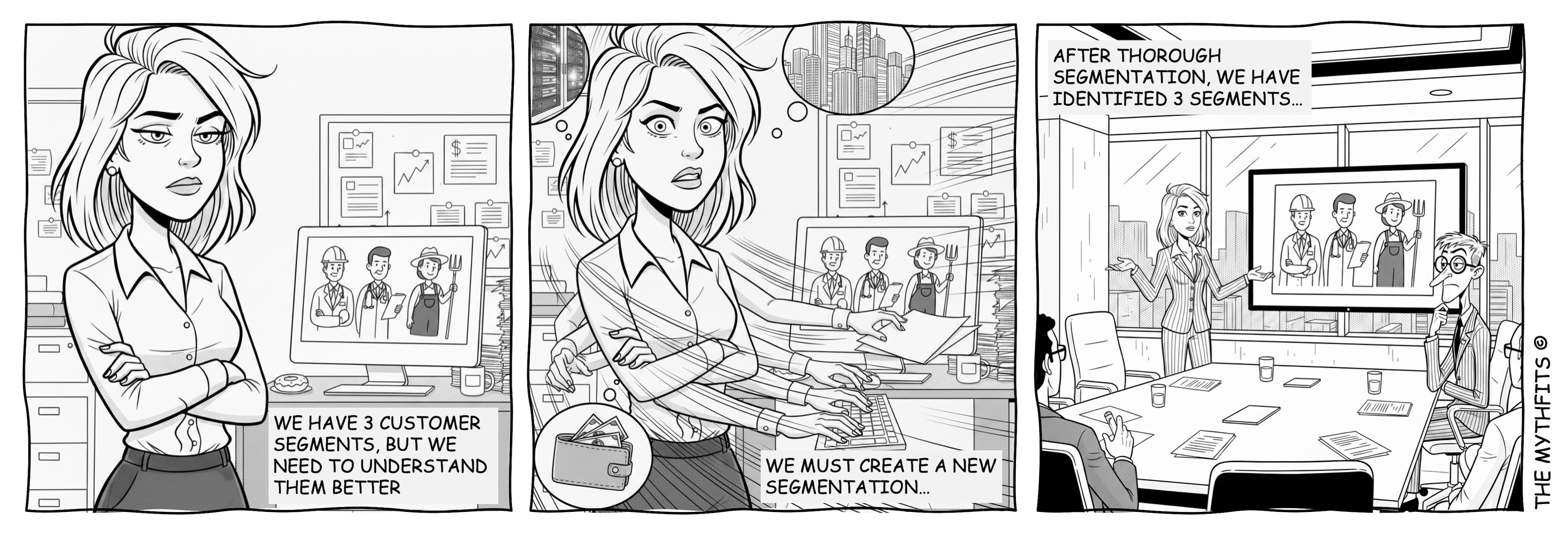
Segmentation illusion
"New segmentation" is often just "old wine in new bottles"—a rebranding exercise that dresses up familiar data without uncovering fresh, actionable insights. True customer centricity isn't about finding more creative ways to describe who your customers are; it's about shifting from descriptive labels to predictive behaviors. Yet, making it actionable in your systems is a challenge.