Expert manager
Companies still stubbornly prioritize function-specific expertise as the desired quality in management hires. This means organizations tend to have experts of professional knowledge in management roles instead of true leaders with the right human skills.
Burnt out
Unlike computers, we cannot reboot ourselves that simply. In case of burn out, prevention is the key, not reaction. Treat your colleagues the way they cannot get to the edge.
Diluted focus
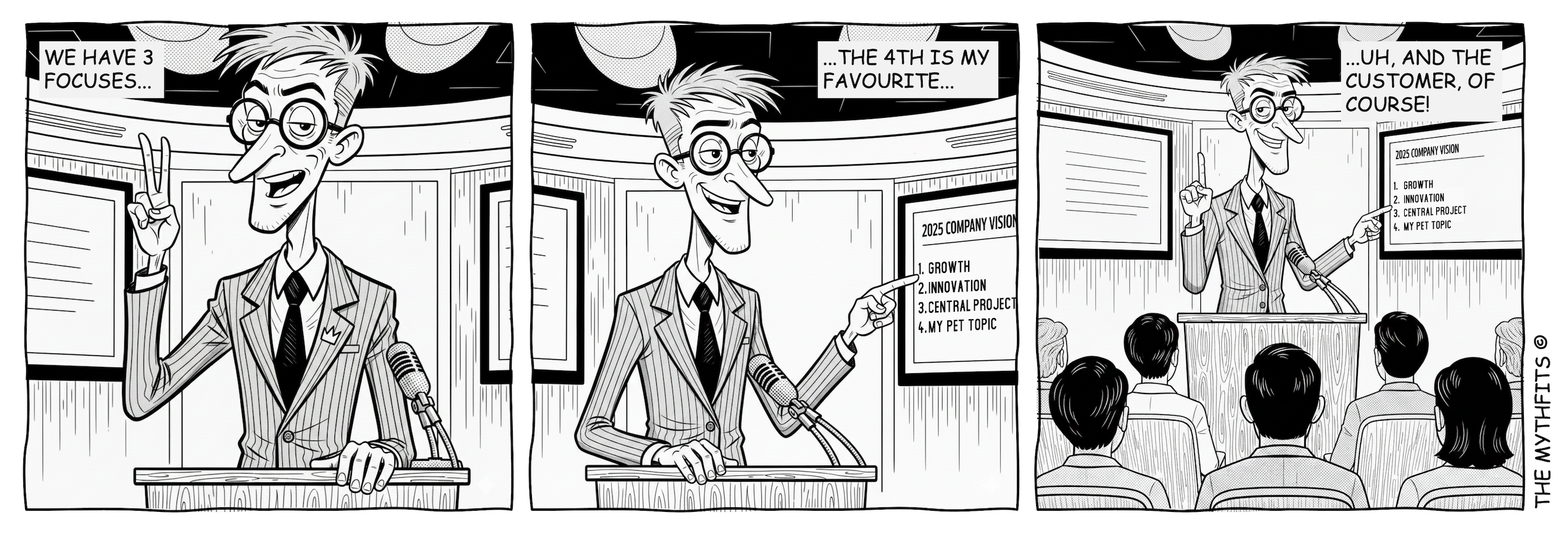
Diluted focus is the silent killer of organizational momentum. When management claims three priorities but speaks of four and acts on five, they create a "priority drift" that leaves teams confused, cynical, and paralyzed. True leadership requires the discipline to align your words with your resources, ensuring that what you measure in the boardroom is exactly what is mastered on the front lines. Clarity isn't just about choosing what to do; it’s about having the courage to ignore everything else.
Segmentation illusion
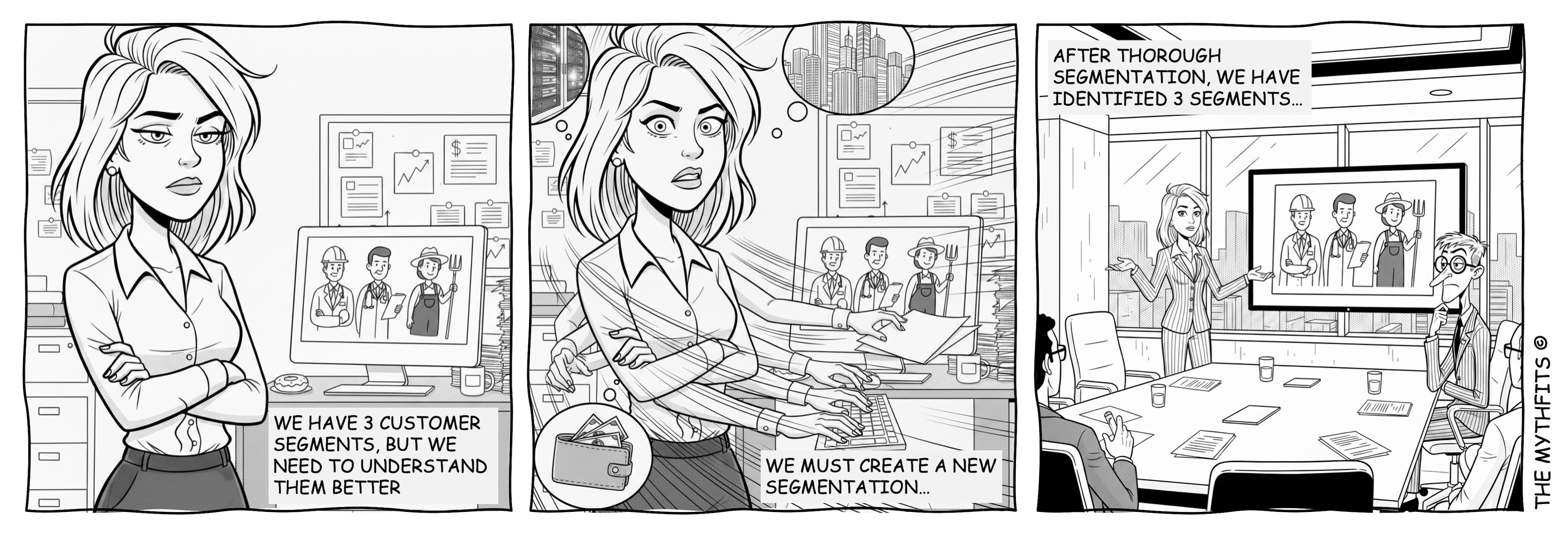
"New segmentation" is often just "old wine in new bottles"—a rebranding exercise that dresses up familiar data without uncovering fresh, actionable insights. True customer centricity isn't about finding more creative ways to describe who your customers are; it's about shifting from descriptive labels to predictive behaviors. Yet, making it actionable in your systems is a challenge.
Duplicating effort
Micromanagement is often a symptom of a manager who hasn't transitioned from doing to designing. When you step in to re-execute operative tasks, you aren't just duplicating effort—you are signaling a lack of trust that stunts the growth of your team. Real leadership value is created by optimizing the systems and structures that remove friction, allowing your operative layers to perform with autonomy and excellence.